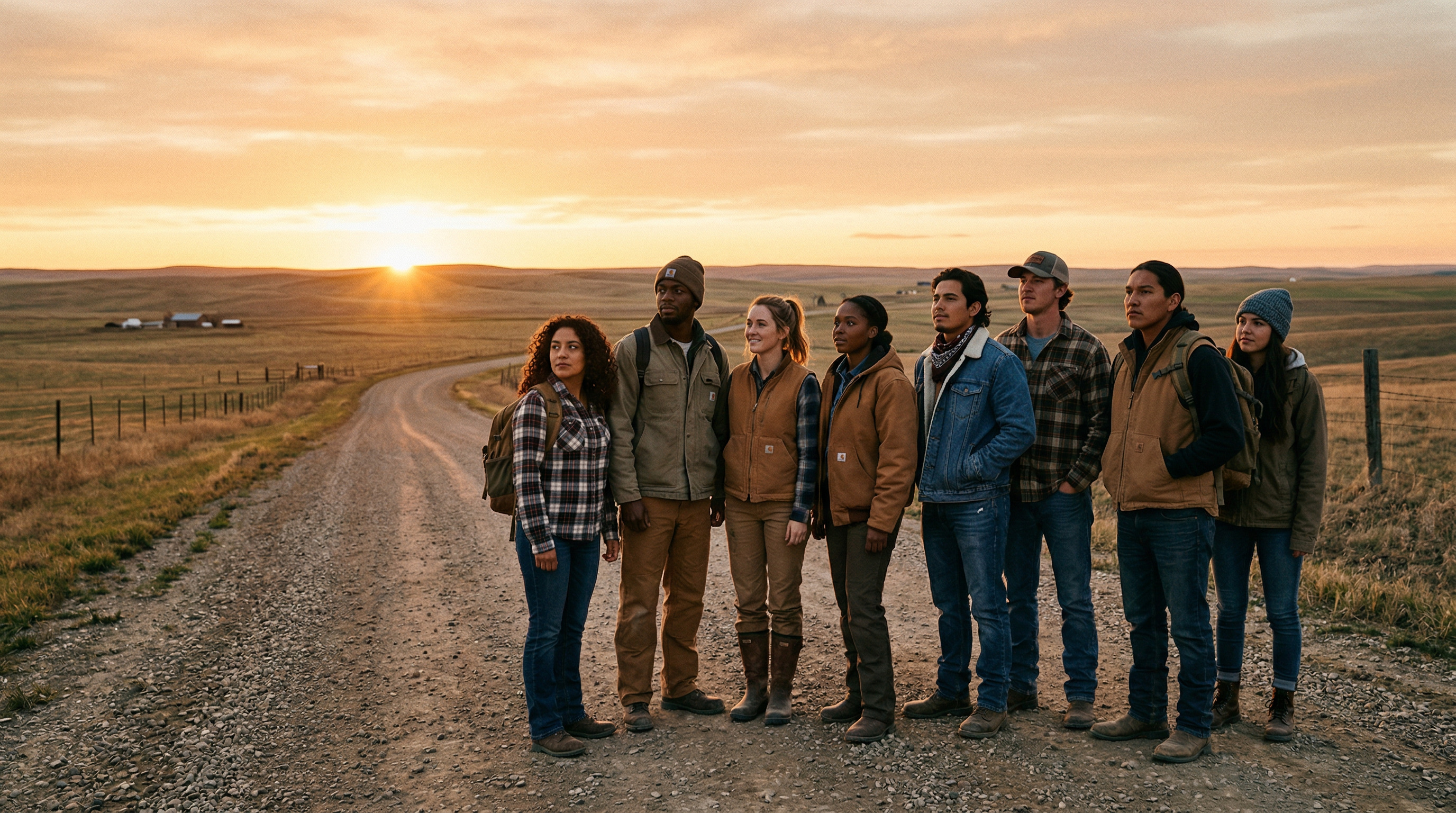
A Light Down the Road
A Dream for the Dreamers
This page isn't about what BSA is doing today. It's about what BSA could become — and the lives it could change — once the pilot proves the model works.
The Vision
Two Problems. One Program.
America has a shortage of skilled tradespeople. At the same time, millions of immigrants arrive on temporary visas with the willingness to work hard but no documented, employable skill to point to.
What if those two problems could solve each other?
Many visitor and work visas allow a stay of up to six months. BSA's apprenticeship program is exactly six months long. The math isn't a coincidence — it's an opportunity.
By year three, BSA envisions opening its program to immigrants on temporary visas — giving them not just a place to stay, but a reason to be here and a skill to take with them wherever they go.
How It Would Work
Six Months That Change Everything
Basic Competency Screen
Before entering the program, candidates would pass a straightforward test — basic math, the ability to follow step-by-step instructions, and enough baseline communication to work safely in a hands-on setting. This isn't about English fluency. It's about readiness to learn.
Six Months of Trade Training
The same residential electrical and plumbing curriculum BSA teaches every student — hands-on, 3.5 hours a day, three days a week, with a retired field expert. Three students per instructor. The training doesn't change. The opportunity does.
English Instruction Alongside the Trade
At a small additional cost, students in this track would also receive English language classes — practical, job-focused English that prepares them to communicate on a real work site. By the end of six months, they'd be building skills in two languages at once.
A Documented, Employable Skill
At graduation, the student walks away with a real, portable trade skill — documented completion of a structured U.S. apprenticeship program in residential electrical or plumbing. That record has value here in the United States, in their home country, and in any future visa or employment application.
Everybody Wins
Who This Helps
The Immigrant
Instead of spending six months in uncertainty, they spend it building a career. They leave with a documented trade skill, improved English, and a stronger case for future employment or legal status — no matter where they go next.
The United States
The country gains skilled tradespeople in fields where the shortage is real and growing. Rural communities get the electricians and plumbers they desperately need. The workforce pipeline gets wider, not narrower.
The Country of Origin
When a trained electrician or plumber returns home, they bring back a skill that has value everywhere homes are built. That knowledge doesn't just help one person — it lifts a family, a neighborhood, a community.
The Bigger Picture
Building a Case, Not Just a Skill
One of the biggest barriers to legal immigration is the inability to demonstrate that you can perform a specialized job or task. A BSA completion certificate changes that. It's documented proof — from a registered U.S. nonprofit — that this person can wire a house or run residential plumbing to code.
Combined with English proficiency gained during the same six months, the graduate doesn't just have a skill. They have a story: "I came to America, I trained alongside American tradespeople, I learned the language, and I can do the work."
That's a story that pleases both sides of the immigration conversation. It's not about politics. It's about people who want to work and a country that needs workers.
BSA envisions this track working hand-in-hand with public organizations, churches, immigrant advocacy groups, and community sponsors who want to invest in people — not just process them.
Why This Is Personal
The President's Story
BSA's founder and president, George Poe, didn't dream this up from a textbook. He grew up watching it work.
George's mother came to America from Navajoa, Mexico. Before she left, she nursed both of her parents through cancer and buried them. Her older sister and brother-in-law sponsored her immigration to the United States — legally, through the system, the way it's supposed to work.
She settled in Chicago and went to work at the Fannie Mae candy factory. She built a life. She raised a family. She is a United States of America immigration success story.
That story is why this page exists. George knows firsthand that when someone is given a real opportunity — not a handout, but a door — they walk through it and they don't look back. BSA's dream for the dreamers isn't theory. It's family history.
The Road Ahead
This Is a Light Down the Road
This program doesn't exist yet. BSA is still lighting the pilot — proving that six months of hands-on training in a mobile shed can produce a job-ready residential apprentice. That proof has to come first.
But once it does, the model is ready to grow. The same training. The same mobile classrooms. The same retired instructors. Just a wider door.
Light the Pilot
Prove the model works. Train the first students. Graduate the first class of plug-and-play apprentices in rural Illinois.
Expand the Reach
More mobile units. More counties. More instructors. Refine the curriculum based on what we learned in year one.
Open the Door
Launch the international track. Partner with sponsoring organizations. Add English instruction. Give dreamers a real path to a real skill.